
Teeth Bonding vs Veneers: Which Cosmetic Treatment Is Right for Your Smile?
December 1, 2025
Gingivitis vs Periodontitis: Understanding the Stages of Gum Disease
December 5, 2025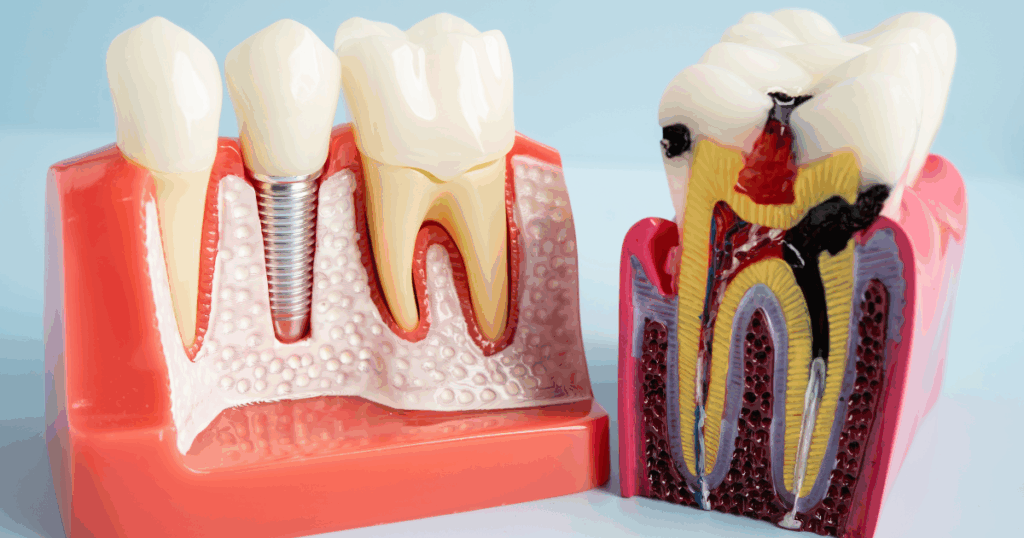
Reading Time: 7 mins
When you’re missing one or more teeth, deciding between a dental bridge vs. implant is one of the most important choices you’ll make for your oral health. Both options effectively restore your ability to chew, speak, and smile with confidence, but they differ significantly in how they work, how long they last, and how they impact your overall dental health. Understanding these differences empowers you to select the tooth replacement solution that best fits your unique needs.
Missing teeth affects far more than your appearance. Gaps in your smile can lead to bone loss, shifting of adjacent teeth, bite problems, and difficulty eating nutritious foods. Whether you’ve lost a tooth to decay, injury, or gum disease, modern dentistry offers excellent solutions for restoring your complete smile. Comparing dental bridges and implants across key factors helps you make an informed decision in partnership with your dentist.

Understanding Dental Bridges
A dental bridge is a fixed prosthetic device that literally bridges the gap created by one or more missing teeth. Traditional bridges consist of one or more artificial teeth, called pontics, held in place by dental crowns cemented onto the natural teeth on either side of the gap. These supporting teeth are called abutment teeth.
Getting a dental bridge typically requires two to three appointments over several weeks. During the first visit, your dentist prepares the abutment teeth by removing some enamel to accommodate the crowns. Impressions are taken and sent to a dental laboratory where your custom bridge is fabricated. At subsequent appointments, your dentist fits and permanently cements the bridge in place.
Understanding Dental Implants
A dental implant is a titanium post surgically placed into your jawbone to serve as an artificial tooth root. Once the implant integrates with your bone through a process called osseointegration, a connector piece called an abutment and a custom crown are attached to complete the restoration.
The implant process typically spans three to six months from start to finish, allowing adequate healing time between surgical placement and final crown attachment. While this timeline is longer than bridges, the result is a standalone restoration that doesn’t rely on neighboring teeth for support and can last a lifetime with proper care.
Key Differences Between Bridges and Implants
Choosing between a dental bridge and implant requires understanding how these restorations differ in their approach, longevity, and impact on your oral health. Each option has distinct advantages and limitations.
Impact on Adjacent Teeth
One of the most significant differences between these tooth replacement options involves their effect on surrounding teeth. Dental bridges require grinding down healthy abutment teeth to support the restoration. This permanent alteration removes protective enamel and increases these teeth’s vulnerability to decay and potential future problems.
Dental implants stand independently in the jawbone, requiring no modification of neighboring teeth whatsoever. This preserves the integrity of your natural teeth and leaves future treatment options open. For many patients, this independence is a decisive factor favoring implants.
| Factor | Dental Bridge | Dental Implant |
| How It Works | Anchors to adjacent natural teeth | Anchors directly into jawbone |
| Affects Adjacent Teeth | Yes, requires crown preparation | No, completely independent |
| Preserves Jawbone | No, bone loss continues | Yes, stimulates bone like natural root |
| Average Lifespan | 5-15 years | 25+ years to lifetime |
| Treatment Timeline | 2-4 weeks | 3-6 months |
| Number of Appointments | 2-3 visits | 3-5 visits |
| Surgical Procedure Required | No | Yes |
| Average Cost (Single Tooth) | $2,000 – $5,000 | $3,000 – $6,000 |
| Success Rate | 90-95% at 10 years | 95-98% at 10 years |
| Maintenance | Special flossing required | Normal brushing and flossing |
Factors to Consider When Choosing
Several important factors should guide your decision between a dental bridge and dental implant. Discussing these considerations with your dentist ensures you select the option that best serves your long-term oral health and lifestyle.
- Jawbone health: Dental implants require sufficient bone density for successful placement. Patients with significant bone loss may need bone grafting before implant surgery or may be better candidates for a dental bridge that doesn’t depend on bone support.
- Condition of adjacent teeth: If the teeth next to your gap already have large fillings or crowns, using them as bridge abutments may be practical since they’ve already been restored. However, if adjacent teeth are healthy and intact, preserving them by choosing an implant often makes more sense.
- Number of missing teeth: Single missing teeth and small gaps are excellent candidates for implants. Patients missing multiple consecutive teeth may consider implant-supported bridges or multiple implants depending on their situation and budget.
- Timeline needs: If you need teeth quickly, bridges can be completed in just a few weeks. Implants require several months for bone integration, though temporary solutions can fill the gap during healing.
- Long-term health goals: Implants preserve jawbone and don’t compromise natural teeth, making them ideal for patients prioritizing long-term oral health. Bridges may be preferable for patients with specific health or anatomical limitations.
- Budget considerations: Bridges typically cost less initially, but implants’ superior longevity often makes them more cost-effective over time when factoring in bridge replacements.
Longevity and Durability
The lifespan of your tooth replacement significantly impacts its overall value. Understanding how long each option typically lasts helps you plan for the future and evaluate true costs.
Dental bridges typically last 5 to 15 years with proper care, though some well-maintained bridges exceed this range. Eventually, the cement may weaken, the abutment teeth may develop problems, or the bridge framework may wear. When a bridge fails, it must be completely replaced, and the abutment teeth may require additional treatment.
Dental implants are designed to last 25 years or more, with many lasting a lifetime. The titanium implant post, once integrated with the jawbone, rarely fails. The implant crown may need replacement every 10 to 15 years due to normal wear, but this is a simpler and less expensive process than replacing an entire bridge.
Benefits of Dental Bridges
Despite the advantages of implants, dental bridges remain an excellent choice for many patients. Their benefits make them the right solution in numerous situations.
Bridges require no surgery, making them suitable for patients who cannot undergo surgical procedures due to health conditions, medications, or personal preferences. The treatment timeline is much shorter than implants, providing complete teeth in just a few weeks rather than several months.
Bridges are typically less expensive initially than implants, making them more accessible for patients with budget constraints or limited insurance coverage. For patients with already-compromised adjacent teeth that need crowns anyway, bridges efficiently restore multiple teeth simultaneously.

Benefits of Dental Implants
Dental implants offer significant advantages that make them the preferred choice for many patients and dentists. Their benefits extend beyond aesthetics to meaningfully impact long-term oral health.
Implants preserve jawbone by providing the stimulation that bone needs to maintain its volume and density. Without tooth roots or implants, the jawbone gradually resorbs, leading to the sunken facial appearance sometimes seen in long-term denture wearers. This bone preservation maintains your natural facial structure for years to come.
When a Bridge Might Be the Better Choice
Certain situations make dental bridges the more practical or appropriate tooth replacement option. Understanding when bridges excel helps you make the right choice for your circumstances.
Consider a bridge when you need teeth quickly and cannot wait several months for implant integration, adjacent teeth already need crowns for other reasons, you have health conditions that contraindicate implant surgery, significant bone loss makes implant placement complex or impossible without extensive grafting, or budget constraints make the lower initial cost important.
Bridges also work well for patients who prefer non-surgical solutions or those whose anatomy makes implant placement particularly challenging.
When an Implant Might Be the Better Choice
Dental implants shine in situations where their unique advantages provide meaningful benefits over bridges. Recognizing when implants are superior helps you make an informed decision.
Consider an implant when adjacent teeth are healthy and you want to preserve them, you prioritize the longest-lasting solution, preventing bone loss is important to you, you want a restoration that functions exactly like a natural tooth, or you’re willing to invest more upfront for better long-term value.
Patients who are good surgical candidates and have adequate bone density typically benefit most from choosing implants over bridges.
Bridge the Gap to Your Best Smile: Discover Your Options at Newport Smile
Choosing between a dental bridge and implant is a significant decision that impacts your oral health for years to come. Whether you’re leaning toward the efficiency of a bridge or the permanence of an implant, the experienced restorative dentistry team at Newport Smile is here to evaluate your unique situation and recommend the tooth replacement option that best serves your smile and your lifestyle.
Don’t let a missing tooth diminish your confidence or compromise your oral health. Contact Newport Smile today to schedule your comprehensive consultation. Our skilled dental professionals will examine your teeth and jawbone, discuss your goals and preferences, and create a personalized treatment plan designed for optimal results. Your complete, healthy smile is our priority.
FAQs
1. Is a dental bridge or an implant better for replacing a missing tooth?
The better choice depends on your individual circumstances. Implants are generally considered superior because they preserve bone, don’t affect adjacent teeth, and last longer. However, bridges may be better for patients who need faster results, cannot have surgery, have inadequate bone or have budget limitations. Your dentist can recommend the best option based on your specific oral health situation.
2. How long does a dental bridge last compared to an implant?
Dental bridges typically last 5 to 15 years before requiring replacement, while dental implants often last 25 years or more, with many lasting a lifetime. The implant crown may need replacement every 10 to 15 years, but the implant post itself rarely fails once successfully integrated with the jawbone.
3. Does getting a dental bridge damage the adjacent teeth?
Yes, traditional dental bridges require removing significant enamel from the adjacent teeth to accommodate the supporting crowns. This permanent alteration weakens these teeth and makes them more susceptible to decay and potential future problems. This is one reason many patients prefer implants, which don’t affect neighboring teeth at all.
4. Can I get an implant if I’ve had a bridge for years?
Yes, many patients successfully transition from bridges to implants. When your bridge reaches the end of its lifespan, you can choose to replace it with another bridge or switch to an implant. However, bone loss may have occurred under the bridge, potentially requiring bone grafting before implant placement. Consulting with your dentist about your options before your current bridge fails gives you time to plan appropriately.
5. Are dental implants worth the extra cost over bridges?
For patients who are good candidates, dental implants often provide better long-term value despite higher upfront costs. When you factor in bridge replacements every 10 to 15 years, the lifetime cost of bridges approaches or exceeds implant costs. Additionally, implants provide benefits bridges cannot match, including bone preservation, independence from adjacent teeth, and superior function and longevity.