
How to Relieve a Toothache Fast: Methods That Actually Work
July 19, 2026
Choosing the Right Dental Clinic Near You in Orange County
August 3, 2026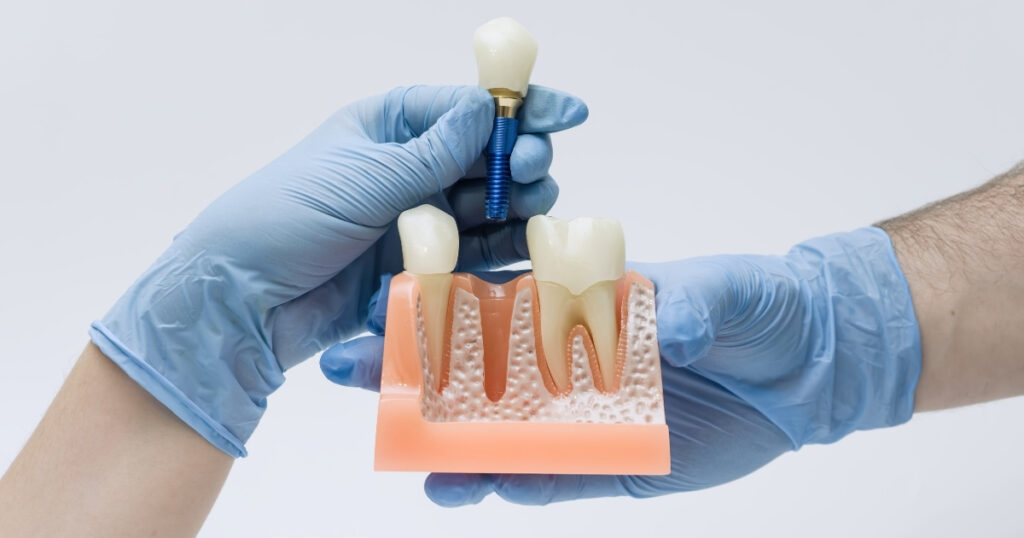
Dental implants represent one of the most significant investments in oral health, yet the perception that they remain financially out of reach prevents many Orange County residents from exploring this transformative option. The reality is that affordable dental implants in Orange County combine advanced materials, proven surgical techniques, and transparent pricing structures to deliver results that rival premium offerings. Understanding how cost-effective solutions maintain clinical excellence helps patients make informed decisions about their long-term oral health.
Modern implant dentistry has evolved to offer accessible pathways for patients who previously believed replacement teeth were beyond their budget. Through strategic financing arrangements, insurance optimization, and practice efficiencies, quality implant treatment has become attainable for a broader population without compromising the materials or expertise that ensure lasting success.

What Makes Dental Implants Affordable Without Sacrificing Quality
The foundation of any implant procedure consists of three core components: the titanium post that integrates with the jawbone, the abutment connector, and the custom crown restoration. Practices achieve savings through volume purchasing, streamlined protocols, and digital workflows. These operational efficiencies translate directly to patient savings while maintaining the same biocompatible materials used in higher-priced settings. This is how affordable dental implants maintain clinical standards without premium pricing.
National pricing for single-tooth implant cost typically ranges from $3,500 to $5,500, with Orange County averages trending toward the upper end due to regional cost-of-living factors and premium market positioning. The surgical expertise required for successful osseointegration remains consistent regardless of practice setting—what varies is the overhead structure and profit margin built into each case.
The True Cost of Dental Implants vs. Traditional Alternatives
When evaluating “How much do dental implants cost?” the analysis must extend beyond initial procedure fees to encompass the full life cycle of each tooth replacement option. A properly placed implant typically functions for decades with routine maintenance, while traditional bridges require replacement significantly more frequently. This longevity difference fundamentally alters the cost equation over a patient’s lifetime.
Cheap tooth replacement alternatives introduce hidden expenses that compound over time. The biological cost of delayed implant treatment includes progressive bone loss that makes eventual placement more complex and expensive.
| Replacement Option | Initial Cost | 20-Year Total |
|---|---|---|
| Single Dental Implant | $3,500–$5,500 | $4,000–$5,500 |
| Traditional Bridge | $2,500–$4,000 | $5,000–$8,000 |
| Removable Partial Denture | $1,200–$2,500 | $4,800–$10,000 |
| Resin-Bonded Bridge | $1,500–$2,500 | $6,000–$10,000 |
Real patient scenarios illustrate these dynamics clearly. A 45-year-old patient choosing a traditional bridge today will likely require at least one replacement by age 60 and possibly a second by age 75, with each iteration costing similar amounts to the original. The same patient selecting an implant at 45 typically maintains that restoration through age 70 and beyond with only routine professional cleanings. When you factor in the preservation of adjacent tooth structure and jawbone density, the value proposition becomes even more compelling.
When examining functional outcomes beyond mere tooth replacement, patients often ask: are dental implants worth the cost? The answer resolves clearly in favor of implants when you consider the preservation of chewing function, facial structure, and jawbone density that alternatives cannot provide. Implants restore full chewing capacity, prevent facial structure changes associated with bone loss, and eliminate the dietary restrictions common with removable prosthetics. These quality-of-life improvements carry economic value that traditional cost analyses often overlook.
- Implants prevent the bone resorption that occurs with bridges and dentures, eliminating future grafting expenses that can exceed $3,000 per site.
- No special cleaning requirements beyond normal brushing and flossing, unlike bridges that require threader floss and specialized tools.
- Full bite force restoration allows unrestricted diet, supporting better nutrition and overall health outcomes.
For patients wondering, “Are dental implants worth the cost?” the answer lies in comparing not just initial fees but the cumulative expense and functional outcomes over decades of use.
Financing Options and Insurance Strategies That Make Implants Accessible
Dental implant payment plans have evolved significantly to address the upfront cost barrier that prevents many patients from proceeding with treatment. Most practices now offer zero-interest financing for qualified applicants over 12 to 24 months, allowing patients to spread payments across manageable monthly installments. These payment structures make affordable dental implants accessible to patients across income levels.
Third-party healthcare financing companies such as CareCredit and LendingClub provide approval decisions within minutes and fund treatment immediately, enabling patients to begin procedures without delay.
Maximizing Insurance Benefits
Dental implant insurance coverage varies considerably across plans, but most major California carriers now provide partial reimbursement for implant procedures. Blue Shield of California PPO plans typically cover 50 percent of implant placement after the deductible, with annual maximum benefits of $1,500 to $2,000. Understanding these distinctions allows patients to structure treatment across benefit years, maximizing reimbursement by splitting the surgical and restorative phases when annual maximums reset.
Health Savings Accounts and Flexible Spending Arrangements offer additional tax-advantaged pathways for funding treatment. Contributions to these accounts reduce taxable income while creating dedicated funds for qualified medical expenses, including dental implants. For California residents in the 24 percent federal tax bracket plus 9.3 percent state bracket, every $1,000 contributed effectively costs $667 in after-tax dollars—a substantial savings that makes the net treatment cost significantly more affordable.
| Financing Strategy | Key Benefit | Best For |
|---|---|---|
| Zero-Interest Promotional Financing | No interest if paid within 12–24 months | Patients who can pay off balance quickly |
| Extended Low-Interest Plans | Lower monthly payments over 36–60 months | Those prioritizing budget predictability |
| HSA/FSA Funding | Tax savings of 25–35 percent on contributions | Employees with high-deductible health plans |
| Insurance Benefit Splitting | Maximizes annual coverage across two years | Patients with good dental insurance |
Strategic Treatment Timing
Patients approaching year-end with unused insurance benefits can schedule the surgical implant placement in the current benefit year, then complete the crown restoration in the following year after benefits reset. This approach effectively doubles the insurance contribution to total treatment costs. Similarly, coordinating treatment with HSA contribution timing allows patients to fund procedures with pre-tax dollars rather than depleting after-tax savings.
Premium Dental Implant Solutions in Orange County
Advanced implant technology has made its way into accessible practice settings throughout Orange County, proving that affordable dental implants no longer require compromising on cutting-edge care. Cone beam computed tomography provides three-dimensional imaging that guides precise implant placement, reducing surgical time and improving integration success rates.
Board-certified expertise matters significantly in implant dentistry because anatomical variations and bone quality assessments require extensive training beyond general dental education.
Transparent pricing structures remove the uncertainty that often accompanies dental treatment estimates. Comprehensive consultations should include detailed breakdowns of surgical fees, laboratory costs, and any ancillary procedures such as bone grafting or sinus elevation.

Investing in Your Smile’s Future at Newport Beach Smile Studio
The decision to pursue tooth replacement represents more than a cosmetic choice—it protects oral health, preserves facial structure, and restores confidence in daily interactions. Newport Beach Smile Studio combines advanced implant technology with transparent pricing and flexible payment options to make premium results accessible to Orange County residents. Our team provides complimentary consultations that include comprehensive imaging, personalized treatment planning, and detailed cost breakdowns with no obligation to proceed. Whether you are replacing a single tooth or exploring full-arch restoration, our specialists guide you through every clinical and financial aspect of your care. Contact us today to schedule your evaluation and discover how low-cost dental implants can transform your oral health without compromising quality or breaking your budget.
FAQs
These frequently asked questions address the most common concerns Orange County patients have about implant treatment costs, insurance coverage, and dental implant financing options.
1. How much do dental implants typically cost in Orange County?
Single tooth implants in Orange County generally range from $3,500 to $5,500, depending on the complexity of placement and the materials selected. This investment includes the titanium post, abutment connector, and custom crown restoration. Many practices offer financing that reduces monthly payments to $150 to $250 over 24 months.
2. Will my dental insurance cover any portion of implant treatment?
Most major California dental plans now provide partial coverage for implants, typically reimbursing 50 percent of the procedure up to annual maximum benefits. Coverage details vary by carrier and plan type, so reviewing your specific policy and coordinating treatment timing with benefit years maximizes reimbursement. Our team verifies benefits before treatment to provide accurate out-of-pocket estimates.
3. Are low-cost dental implants as reliable as more expensive options?
Treatment outcomes depend primarily on surgical technique, implant system quality, and patient bone health rather than price point. Affordable options use the same FDA-approved titanium materials and proven placement protocols as premium-priced alternatives. Success rates remain consistently high across all price ranges when experienced clinicians follow evidence-based protocols.
4. What financing options help make implants more accessible?
Zero-interest promotional financing through healthcare credit companies allows qualified patients to spread payments over 12 to 24 months with no interest charges. Extended-term plans with low interest rates offer smaller monthly payments over 36 to 60 months. Health Savings Accounts and Flexible Spending Arrangements provide tax advantages that effectively reduce treatment costs by 25 to 35 percent.
5. How long does the complete implant process take from start to finish?
The typical timeline spans three to six months, beginning with surgical placement and allowing eight to 12 weeks for osseointegration before attaching the final crown. Immediate load protocols can reduce this timeframe in certain cases, while complex situations requiring bone grafting may extend treatment to eight months. Your consultation will establish a personalized timeline based on your specific clinical needs.